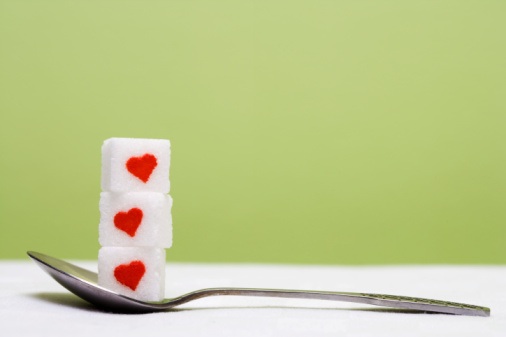
I have a lot of feelings

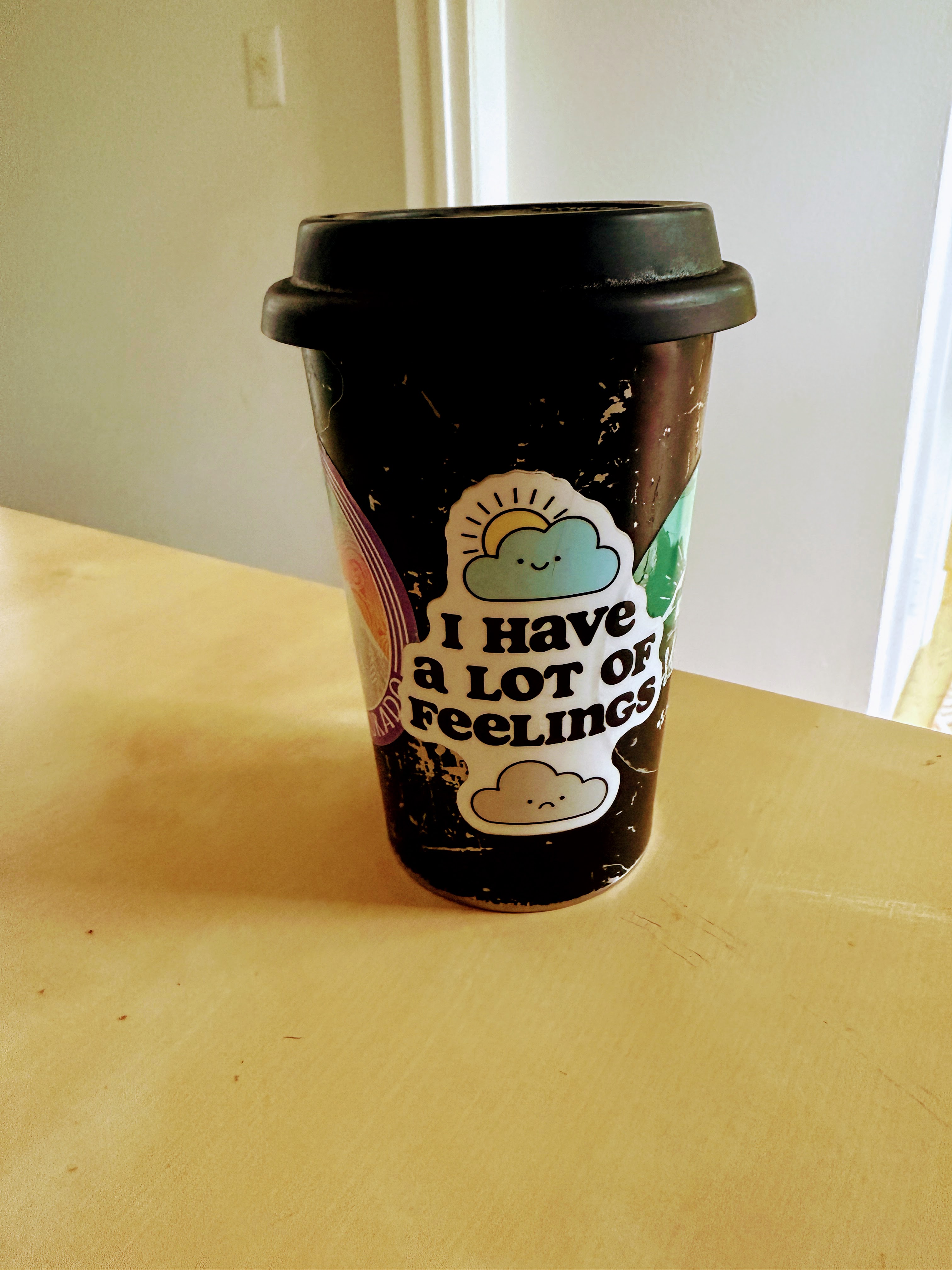
My daughter gave me a sticker. It’s cute and fun. So I smiled, said thanks, and put it on my travel cup.

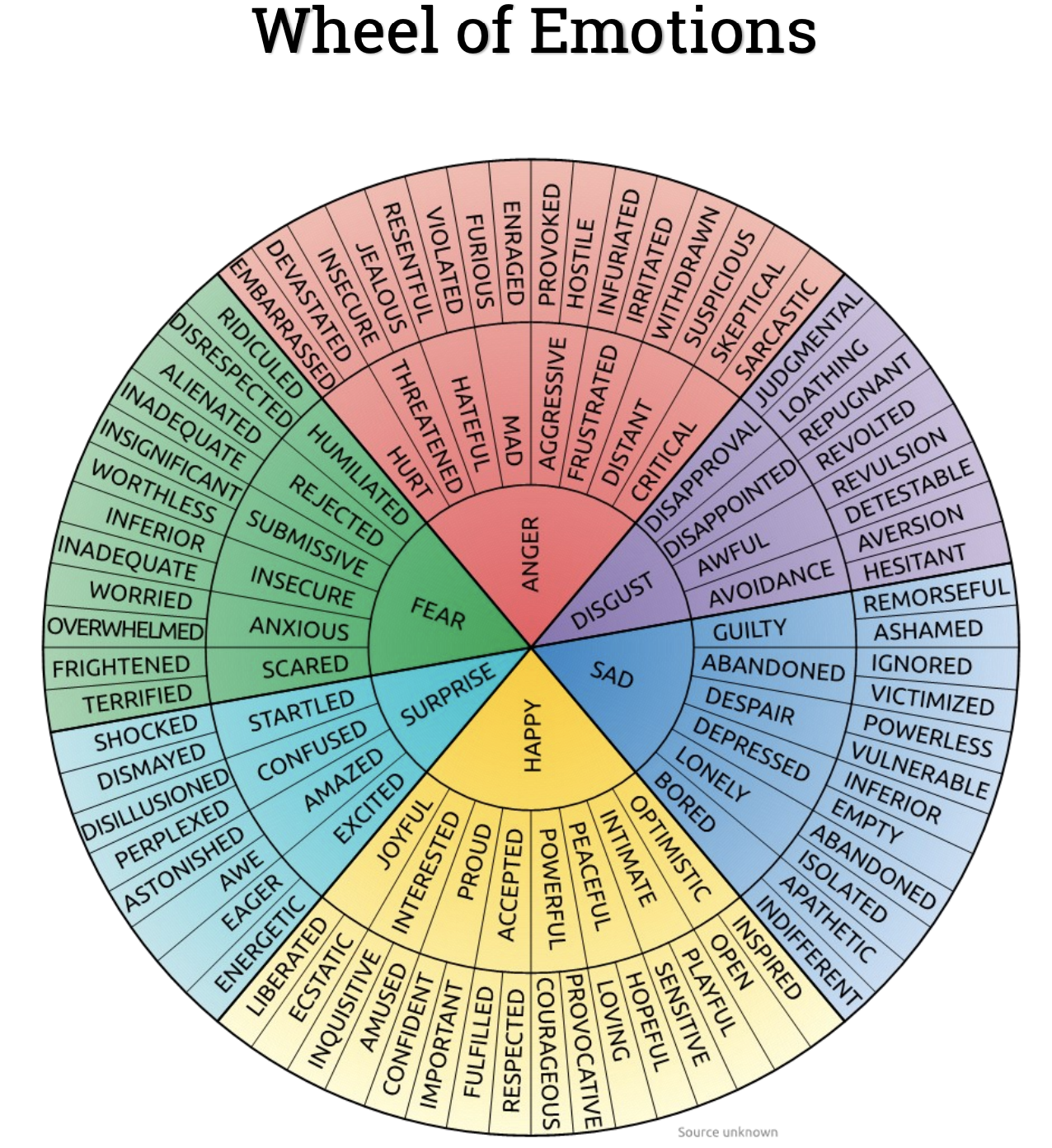
Wait, hold my tea. I DO have a lot of feelings. In fact, I’ve had them for a long time. Probably my whole life! Humans experience 6 basic emotions: happiness, sadness, fear, disgust, anger, and surprise. These emotions can combine to create different variations.

Hence, a lot of feelings. Life has been messy and complex these past years. Fortunately, I have found a gifted and wonderful therapist who has helped transform my relationship with the emotions in my driver’s seat – fear, anger and sadness. And I get to spend more time feeling playful, peaceful, fulfilled, excited, and accepted.

Most of time, I’m happy. (In the days ending in Y and definitely when I’m playing with puppies!)

I am inspired to face my fear of stepping back into the world of nutrition. Nutrition has been a source of fear and inadequacy since my cancer diagnosis. Who wants to hear nutrition recommendations from a cancer survivor? Obviously, I ate the wrong type of broccoli, so don’t listen to me.

Or do! I do have some thoughts about this journey. And I’d like to explore the intersection of nutrition and all the other crap that sticks to the wall. Well, not all of it is crap, just challenging.

Calm the fork down and stay tuned for my thoughts, nay feelings, regarding:

Motherhood

Perimenopause/Menopause

Anxiety

Cancer

And so much more….

Gluten Intolerant, etc.

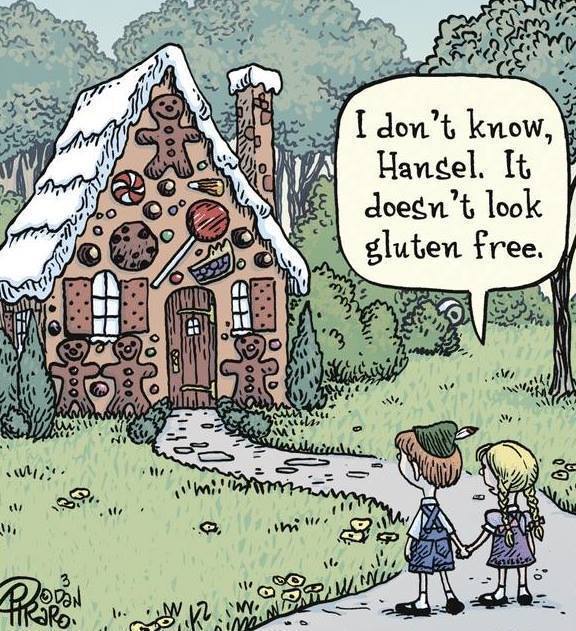
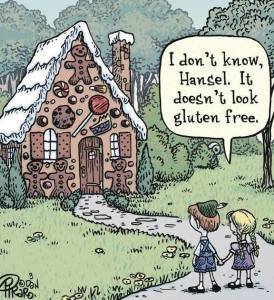
hansel and gretal

There is a spectrum of related conditions and diagnoses that fit under the gluten intolerant umbrella.

  • Celiac disease (CD) is an immune-based reaction to the dietary protein gluten. It damages the mucosal lining of the small intestine and resolves with the removal of gluten from the diet. The diagnosis of CD is complex and tricky, involving serological testing, mucosal biopsies, genetic markers, and is often under diagnosed because no one test has perfect sensitivity or specificity. The array of symptoms related to CD is vast and it is estimated that 2.5 million Americans are undiagnosed. Here is a useful Q&A article to expand on the diagnosis of CD. For those diagnosed with CD, a gluten-free diet is necessary and the only proven therapy.
  • Non- CD Gluten Sensitivity (NCGS) is a related condition that can cause a similar range of symptoms, but shows no signs of intestinal damage. Studies are indicating that this condition results in abnormally high levels of proteins activating inflammation  and low levels of suppressors T cells to modulate the inflammation. Although the evidence has established gluten sensitivity as a real condition apart from celiac disease, it hasn’t yet yielded a diagnostic test or new treatment for gluten sensitivity. Thus, gluten sensitivity is still a diagnosis by elimination. Patients in whom celiac disease has been ruled out are asked to eradicate all gluten from their diet. If their symptoms improve, they are considered gluten sensitive.
  • Allergy occurs when the body develops an antibody to specific portion in a food. This response involves a specific immune cell (immunogloblin E, IgE) neutralizing an allergen, such as wheat protein, directly or by signalling the rest of the immune system. Symptoms are often immediate or within a few hours: itching, swelling, hives, nasal congestion, headache, itchy eyes, difficulty breathing, and anaphylaxis. Avoiding wheat is the primary treatment for this condition.

What contains gluten?

Wheat (durum, emmer, spelt, farina, farro, KAMUT® khorasan wheat and einkorn),
barley, rye, spelt, triticale. Oats do not contain gluten, but are a potential source due to cross-contamination.

gf3.jpg (768×994)

If you have CD, you must strictly follow a GF diet. Always. The impact of not managing CD can be serious. Essentially, the long-term impact of CD is malnutrition. The paramount effect related to a malnourished body is disease. Ironically, symptoms can often be confused as other diagnoses. Digestive issues, joint pain, infertility, iron deficiency, depression, bone loss, growth retardation, dental problems, and fatigue are all recognizable symptoms of CD.

Here is the nebulous bit: if you have a gluten sensitivity, you have a little more room to wiggle than do people with CD. Intolerance to food is often delayed and undetected because it involves immune cells getting activated indirectly. Intolerances result when a body is unable to process a part of a particular food, perhaps due to a lack of an enzyme, nutrient, or bacteria. Note, a food intolerance cannot be detected by lab test.

Think of a pot of water simmering at a low boil on the stove. This is your body maintaining balance, containing the cumulative, under the radar inflammation. If bit by bit you add noodles or turn up the heat, the boiling will no longer be contained within the pot. Depending on the individual, insults to body that drive unruly inflammation (and cause the pot to runneth over) include environmental factors such as pollen, cigarette smoke, pet dander, pesticides, sugar, stress, and foods. The story of a food sensitivity is intimately involved with inflammation. They dance back and forth. When ongoing inflammation is present, you can be more susceptible to developing food sensitivities. And unresolved food intolerances trigger chronic inflammation. If too many insults overwhelm your body, it may react with symptoms such as: skin conditions,“foggy mind”, depression, lack of focus, abdominal pain, bloating, diarrhea, constipation, headaches, bone or joint pain, and chronic fatigue.

Good news! One can combat and even reverse this damage in the body with a careful plan to identify sensitivities, heal the gut, and quench chronic inflammation.

Before going on GF diet, get a complete work up to rule out celiac disease. You must be eating gluten for accurate test results. It is important to make a correct diagnosis.

Then consider some guidelines for introducing a GF diet:

■ Negative blood tests for celiac disease and no sign of damage on an intestinal biopsy.

■ Symptom improvement when gluten is removed from the diet.

■ Recurrence of symptoms when gluten is reintroduced.

■ No other explanation for the symptoms.

Here is a great article to expand on introducing a GF diet.

If a gluten-free diet is indicated, it will take effort and you want to do it well as to avoid nutritional deficiencies such as B vitamins and fiber. Generally, it is avoiding common, everyday foods and paying attention to hidden ingredients that are not the obvious sources, such as bread, pasta, and cereals.

A gluten-free diet is a necessary medical treatment, not a weight loss diet, the latest trend, or a good reason to shop at Whole Foods.

And in other news, we keep some humor to CTFD.

Stay posted!

Gluten-free: To be, or not to be?


IMG_1846

Ok, this is hilarious…..

http://www.takepart.com/video/2015/03/16/gluten-intolerant

I’m not laughing anymore. Why? Because it’s not funny. Last month, when I saw this clip, I did laugh and felt a little silly. Hey, that’s a really good spin on my situation. 

To be, or not to be? 

You see, that is my question. Should I join the hottest eating trend and go “gluten-intolerant”? Note, I don’t want to be GF. How I would love to leave one of the 10 million bakeries here with a pretzel in hand! Or not have to squirm at the dinner table when there is homemade Spätzle being served. Also, it is physically impossible to be gluten-free in Germany. Okay, not really, but I am pretty frustrated. Maybe I could CTFD and just eat what everyone else is eating. Seriously- this gluten-free idea is so high maintenance and inconvenient.

CTFD. That is the answer! Pass the bread basket, what’s the big deal? My health? Maybe….but maybe it’s just me. After all, I do yoga and my parents were hippies.

Since we arrived in Germany, both of my children (2 year old and 5 year old) have developed eczema. Bad. We’ve tried several lotions and creams, corticosteriods, anti-histamines, antibiotic creams when it turned into impetigo, different doctors, anti-allergenic soaps and detergents, and natural fiber clothing.

At my wits end, last week, I stopped feeding my children gluten and the eczema has cleared almost entirely. Well, until my daughter was fed a cake-pop at school. I’m sorry, I can’t CTFD about this. This is not some psychosomatic, spiritual new-age, non evidence-based, hysterical issue. My children are sensitive to gluten! For real. They have red, inflamed, itchy patches all over their body when they eat bread, pretzels, crackers, cereal, pastries, noodles…..pretty much everything out there in the Deutschland breadbasket.

And I’m pretty confident they didn’t learn this at yoga class.


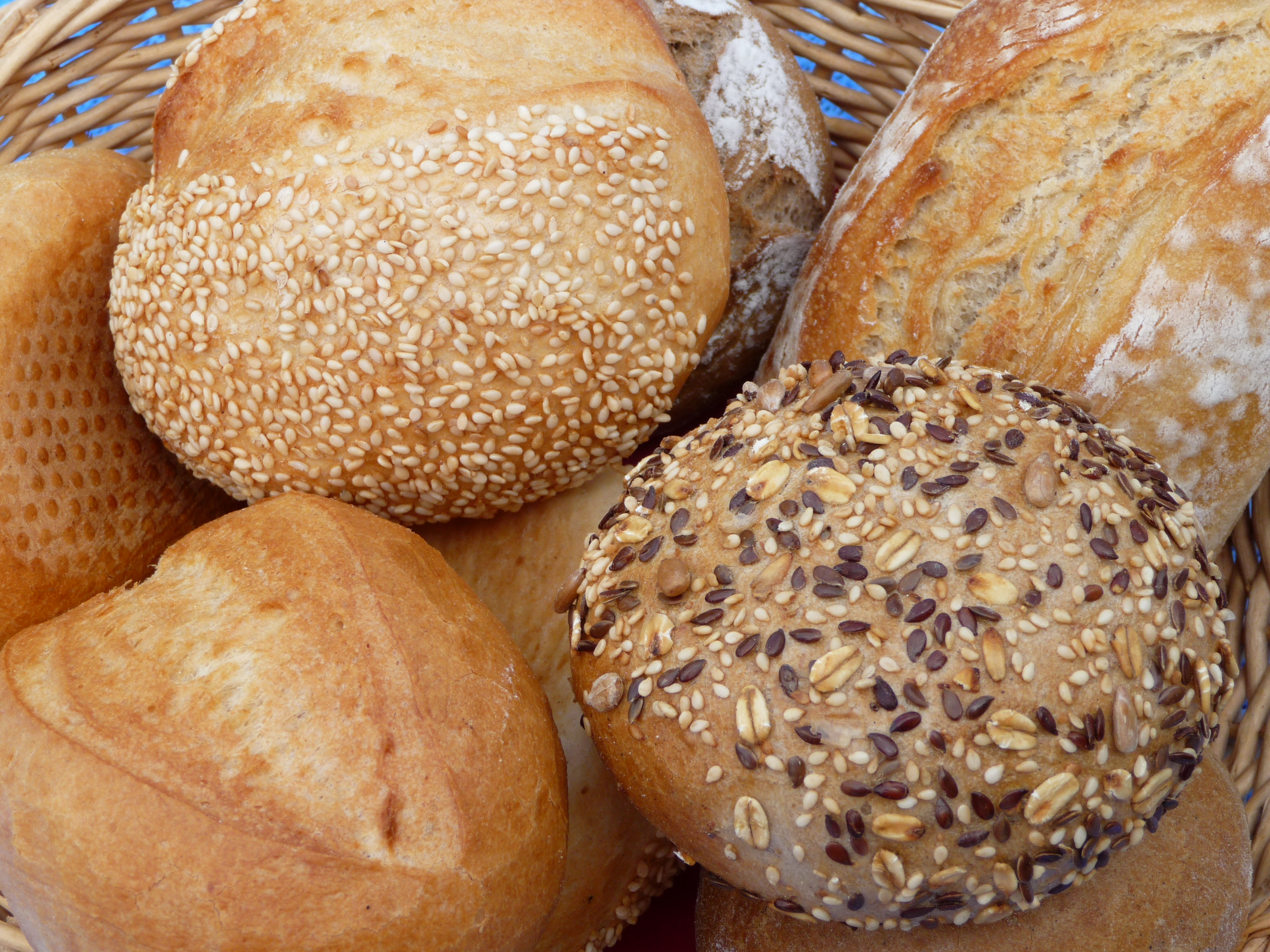
Brotzeit

Korb_mit_Brötchen

I am not sure how to translate CTFD into German. I think that is what I have been doing for the last few months- working on translating my life into German. Everything nutrition-related is getting lost in translation. Or maybe it is just lost.

When I was in my early 20’s, I was diagnosed with Ulcerative Colitis. It has been lurking in my health history for years. It comes and goes. For years now, it has been gone. I believe a combination of nutritional intervention and medicine keeps it manageable. I am grateful not to be one of the many patients I often saw in the hospital- significantly malnourished, treated with steroids, on parenteral nutrition, and/or  awaiting surgery to remove part of the colon. But I am scared by the possibility. Although I don’t want it to be true, my colitis and other symptoms of “a gut out of balance” respond well to a gluten-free, dairy-free, low sugar diet. And so, I was that uptight white female shopping at Whole Foods for my organic gluten-free snack after a yoga class. Namaste, get out of my way!

Now I am a genuinely lost American in Bavaria, Germany. In case you need a visual, imagine me next to a table of an endless variety of meat, bread, and cheese. In order maintain my sanity, I have allowed a lapse in my nutrition ideals. When in Germany, eat like a German?…CTFD and enjoy the culture?

Let’s just say, it hasn’t been going well. My gut is not good.

Every Monday and Wednesday, I need to make a snack for my daughter for preschool. It’s called Brotzeit…literally translated it’s “breadtime”. As an act of defiance, I send “ants on a log”, kale chips, bananas with coconut and peanut butter, carrots and hummus. My daughter wants me to try her favorite- a Leberkäse sandwich ( translated to “liver cheese”, yet it is not either liver or cheese…I’m so confused).

What next?

In case of an emergency

oxygen_mask

Ladies and Gentleman, we wish you all an enjoyable flight.  When the seatbelt sign is illuminated, we suggest sitting with your 18 month old child on your lap for the next 9+ hours with your seat belt fastened. You will find this and other safety information in the seat pocket in front of you. I found the Skymall magazine, a barf bag, and information about what to do in a the case of emergency. After several hours of wiggling in a miniature space, we had sleep. Luckily, my right arm was free to grasp the card and I was able to give my undivided attention to: what to do in the case of an emergency.

I ponder some inane instructions put forth by the airline. Here’s one: if you are traveling with a child, please secure your oxygen mask first before helping others. Outrageous! You see, looking down at the sleeping babe in my arms, I think about how I’d to do anything and everything to keep her safe.  She would definitely get the mask first.

More time passes and I hadn’t really had much to eat or drink, been to the bathroom, or slept. I wasn’t about to sacrifice the sleeping baby status for my needs. My cellphone and I were in airplane mode for the duration of the flight.

And we made it.

Ironically, the oxygen mask recommendation really makes sense when you are on the ground. In fact, it is genius. If parenting had a safety card like the airlines, it would recommend wearing the oxygen mask at all times. Think about it.

Parenting 101: Help yourself first so you can better help others.

As a parent, I have a newfound drive for self-care. I am a better parent when I take care of myself. It is not selfish, wasteful, frivolous, egocentric, harmful, or silly. IT IS ABSOLUTELY NECESSARY. Airplane mode for the duration of a child’s life is life-threatening…..to the whole family.

I have been carving out time and opportunity to practice better self care. Here are a few:

1. Greet the day. Go outside for a few minutes to see the sun, take a fresh breath of air, feel the earth.

2. Drink a glass of warm lemon water (1/2 lemon, real not juice). Stimulates digestion, helps to detoxify, great source of vitamin C, and a great start for #3

3. Stay hydrated. Aim for a minimum of 64 ounces of water, non-caffeinated tea, coconut water, etc.

4. Exercise to move the body and challenge your heart rate. EVERYDAY! It’s true, physical activity trumps nutrition in my book.

5. Avoid refined and processed foods.

6. Have a midday green drink. Juice or blended: spinach, swiss chard, green apple, kiwi, matcha green tea powder, spirulina, cucumber, mint, basil, avocado, etc

7. Get pampered. Massage, acupuncture, yummy food, aromatherapy candle, soak in hot tub.

8. Meditate. So powerful, yet takes practice. Also great for resetting after a tough parenting moment. I have a few guided meditations downloaded on my phone. Tara Brach has a number of podcasts here:

http://www.tarabrach.com/audiodharma.html

9. Adequate sleep. Virtually impossible with small children, but give it your best shot.

10. Ahhhhh, and CTFD


Slippery Fish


My life is seldom under control. My floors are sticky, piles of stuff are always in need of organizing, and rotten food is almost always in my refrigerator. On days that I attempt to achieve control, it ends with an exhausted body and a mind that is dark and mean. I grip onto insignificant things like Facebook, making the bed, and matching the kid’s outfits.

Some days, I put a few things in place and attempt to go with the flow. This is most successful when I make no plans, have no appointments, and have a big bowl of fresh fruit at the ready. We hunker down and trash the house. There is ease, but it’s not always practical.

So, I wonder if there is a middle ground.

Have you ever tried to hold a fish? Maybe it’s like holding a fish. Hold too tight- it slips free, hold it too loose- it slips free. It’s a matter of holding it with a gentle ease. Whoops, there it goes.

The slippery fish analogy works well with a CTFD diet, too. Don’t hold on too tight, but don’t be too loose. In other words, we can’t take it all too seriously, but perhaps we should pay attention.

The food we eat is important. It has an impact on our health over time. The what and how we eat can steer us in a direction of disease or health.  SAD is an acronym for the standard American diet. Studies show it is indeed sad and bad. This is a diet comprised of mostly refined and processed foods and it is a pattern of eating, day-to-day, meal-by-meal, over a lifetime.

Hey, I know the 5 bowls of Honey Nut Cheerios I ate last night was not my best choice. But it happened and I do feel guilty and bloated. I have two healthy options to cope with the guilt:

1. Accept the situation

2. Change the situation

I can do that. Maybe. Actually, I really struggle with both. For me, option 3 sometimes comes into play.

3. Continue to feel guilty and finish the entire box of cereal.

Fortunately, option 3 fits in the CTFD diet plan! Understanding that diet has the most impact over time is the key to CTFD. There is wiggle room for making mistakes-you know, being human. Everyday we have opportunities for changing or accepting. Each meal or snack is an opportunity. A moment to hold on tight, hold on loose, or just CTFD.

Sugar and the Brain

There are two stories that I wish I could erase from my mind. A movie- Requiem for a Dream– and a book- The Road. I know, works of fiction. Briefly, if you chose to insert a dark cloud of hopelessness into your life, Requiem for a Dream is about heroin addiction, and The Road is about the life of a boy and his father surviving the end of the world. It has been years since I saw and read them, but still, I lay awake at night and wonder…..what went so wrong. And then I think of ways I can buffer my children from these horrors. My husband tells me I worry to much. But, he hasn’t seen Requiem for a Dream.

In one of my earlier posts, I made reference to my youngest child eating sugar and, as a result, perhaps I’m priming her for heroin addiction. I meant this as an example of how my thinking can be alarming and colorful, possibly more for the big screen.

I saw this video and thought it was a clever discussion of the science behind this fear. After viewing, I felt a sense of CTFD.


Useful Tips for Less Sugar

  1. Limit sources of liquid, concentrated sugars. Juices, soda, sports drinks combine the double whammy of “lots of sugar and quickly absorbed”. Instead choose unsweetened drinks, tea, water, or diluted drinks (1/4 cup juice: 3/4 cup water).
  2. Read the ingredient list on products, especially packaged products such as cereal, crackers, bars, breads. Many products use the front of the box to tout benefits- “natural! whole grain! less sugar!- but the ingredient list is your more accurate guide. Limit products that list refined ingredients first or second (example, enriched wheat flour, brown rice syrup, evaporated cane juice). Instead look for whole grains as the first ingredient. Also, +2-3 grams of fiber per serving is indicative of a less refined product. For the tech savvy, consider apps to evaluate products (Example www.fooducate.com)
  3. Keep it out of your house. Most of the time, don’t bring it home and avoid the temptation. But, enjoy that quality moment of something sweet and seductive on occasion. Make a batch of chocolate chip cookies with your child, eat a piece of dark quality chocolate,enjoy that ice cream cone after the pool (Hint- give the rest of the cookies to the neighbors, because putting them in the freezer just doesn’t work- frozen cookies are also yummy)
  4. Eat fruit! Keep it in bowls around the house. It’s sweet, but loaded with fiber, nutrients, antioxidants, phytochemicals, flavonoids. Go for different colors and lots of variety.
  5. Avoid skipping meals and going long periods without nourishment. Often we make poor decisions when hungry and quick fixes appear in the form of a sweet something.
  6. Balance meals and snacks with a protein and healthy fat source. Protein, fat and fiber will help maintain a sense of satiety and sustained energy.
  7. Incorporate stress management into your day. Sugar cravings may be triggered with stress. Instead of using sugar to produce the feel-good chemicals in our brain, try using other methods of relaxation.
  8. Bottom-line- eat a balanced diet rich in fruits, vegetables, healthy fats and lean proteins. Limit processed foods.

I’d love to hear what works for you! Please share your thoughts, experience, and wisdom.

blueberries

Just a Spoonful of Sugar?

It helps the medicine go down and in the most delightful way! Did Mary Poppins  innocuously forge the path for our current food industry? Let’s round her up with the likes of Ronald McDonald, Slush Puppies, and the M&M guys, and say STOP IT!

Ah, but the story of sugar is more complex. And it doesn’t come with a snappy soundtrack.

sugar

There is a concern that sugar feeds cancer. Interestingly, a Positron Emission Tomography (PET) scan is an imaging test that uses radioactive glucose to detect cancer. Tumor cells light up more indicating that more glucose is being metabolized in these cells. This theory has led to many alternative approaches that starve tumors as a cure and, by default, starving the normal cells. I have issues with the “sugar feeds cancer” theory. It is misleading. It results in people becoming malnourished, often creates more stress, and diminishes quality of life. Cancer cells grow uncontrollably and so demand a lot of energy to do this. Just because these abnormal cells use sugar more robustly doesn’t necessarily mean sugar feeds cancer. Really all cells need sugar. Yes, on a cellular level, our bodies need sugar. So what’s the problem?

Disease doesn’t just happen from a single event. One doesn’t have cancer because they ate all of their kids’ Halloween candy. One doesn’t suffer from a heart attack because of that latte with whipped cream.  Most often, disease is a result of a life long pattern. The standard American diet (SAD) is a pattern that repeats the latte daily, combines it with bacon, forgets to add the veggies, and then adds sugar.

It’s SAD- sugar impacts disease over a lifetime.

So let’s get started by examining these two points about sugar:

  1.  How it is delivered– it’s not by the spoonful, more like by the ton.
  2.  How it affects our health– obesity, diabetes, cancer, cardiovascular disease, GI disorders, hormonal imbalances, inflammation, metabolic abnormalities, etc.

Delivery

Too much and it’s chronic.

A typical American consumes about 80 pounds of sugar every year !!

Specific guidelines for sugar intake are not well defined (largely because we don’t want to hear it and the sugar industry is happy to give society a fix).

Here are some considerations:

  • The World Health Organization (WHO)  recommends no more sugar than 5-15% of total calories consumed (example, typical 2,500 calorie diet would mean about ~25 grams per day….oh, FYI a can of soda is 40 grams of sugar)
  • Our government does not offer specific regulations for sugar, BUT some interesting developments are on the horizon. After 20 years of the same nutrition facts panel on food labels, the FDA is proposing an update-  food products will provide information about added sugar! The nutrition facts panel is shaping up to be a useful tool for making informed decisions about health and diet. Check it out

Quickly absorbed

Carbohydrates are utilized by the body and brain as a energy source. Ironically, our body needs carbohydrates in it’s simplest form- in the form of glucose. Our health depends on a supply of glucose. Ideally, our carbohydrate sources need to be high fiber, nutrient-dense to provide a balanced, slow delivery to our system. Much of our food supply has been stripped from it’s natural packaging and processed into an IV drip of quickly absorbed carbohydrates. Since refined and processed sugar sources in our diet are absorbed too quickly into the bloodstream and are largely devoid of nutrients necessary for health, we are a malnourished obese population.

Our Health

This combination of quick absorption and constant insult isn’t what the human body is designed to tolerate. Our bodies are good at storing up energy for days of no food. We’ve adapted to survive the wait until we find another cache of berries or perhaps the need to run from saber tooth tigers. Our current lifestyle patterns clash with important physiological processes and our health suffers. I’d like to discuss all the implications, but will boil it down to a few for now.

  1. Hormonal Imbalances- In response to a repeated, high sugar load, insulin levels remain elevated. Insulin is a major player in the body- when it talks the body listens! It stores fat, it feeds cells, it drives metabolism of energy, fats, and protein. And if insulin is always talking, cells develop a resistance. And then insulin keeps talking, louder. This chatter leads to diabetes, stimulation of insulin-like growth factors (IGFs) on tumor cells, derangement of other hormonal processes, etc. Really, there isn’t a tissue or organ that doesn’t listen to insulin. Insulin rules!
  2. Obesity– Our bodies are designed to store fat. On a cellular level, we are programmed to cope with a scarcity of food. The body is very efficient at storing calories as fat to stave off hunger when food is scarce. Now, our diet is laden with calories (ahem, sugar). Simply enough, these two variables have driven the obesity epidemic. Then layer other factors of stress, environmental toxins, sedentary lifestyle and we’ve got a real mess. And as an added insult, stored body fat releases hormones that control insulin. Insulin still rules!
  3. Gastrointestinal Health– A balanced gut is key to good health. The gut is a central player in health-  it digests and assimilates nutrients, screens microbes, signals immunity, supports an ecosystem of bacteria. Suboptimal gut health is not just digestive distress- it can be linked to most chronic diseases and symptoms (allergies, inflammation, depression, cancer, autoimmune disorders, skin issues, arthritis). A diet high in refined, processed carbohydrates wreaks havoc on your gut. Bad bugs, like yeast, love refined carbohydrates and will thrive if that’s what they are fed. Beneficial gut flora needs to be fed by prebiotics, largely supplied by fiber sources from diet.

Are you feeling calm? Take some deep breaths. Despite these challenges, our bodies are a beautifully designed, buoyant system! We have a huge capacity for good health.

So stay tuned for the next post Useful Tips for Less Sugar

Sugar: Hurts so good

If I were to write a book on the role of nutrition in health and disease, it would be short.

Chapter 1: Sugar is not healthy. The end.

Of course, I will never write this book because no one would ever want to read it. But, I will write a post about it. Why? Because sugar is my battle of choice. In an attempt to CTFD, I have identified sugar as a necessary fight.

I love sugar and it’s a daily challenge to keep it at a healthy distance. I suspect I am not the only one out there with this relationship with sugar. It’s such a good friend and always there when I need it. Hello?

And therein lies the problem. It’s everywhere! It’s always an obstacle to surmount. Sugar is added to sweet potato fries, salad dressings, ketchup, chips, soy milk, almond milk, hemp milk, sushi, smoked salmon, BBQ chicken, bread, yogurt, dried cranberries, juice, tea….oh, about 80% of our food supply. And then, there’s the obvious culprits: soda, ice cream, donuts, cake, M&M’s, etc.

It’s hard to CTFD when I’m all hyped on sugar. 

Ironically, along with the rest of the American population, I have met my match with sugar. It has done some serious hurt. With heavy heart, 4 months ago, I began to follow a sugar-free diet to address health issues. Yes, no sugar. Did I say no sugar? Because I mean no cane sugar and no molasses, dates, honey, low glycemic coconut sugar, agave nectar, rice syrup…sugar.

I will save you the gory details for another day. It’s still a work in process!

And so I have chosen my battle. If sugar consumption is chronic for me, what about all those people outside the bubble of Boulder? It’s almost impossible to avoid added sugar in our food. Honestly, it is an epidemic in our country. I absolutely recognize that big forces are against us- the food industry, pleasure receptors in the brain, economic stress, lack of government oversight. The battle is uphill, but it is worth the fight.

My challenge is to make sugar an occasional sweet taste of life that tantalizes my senses. Not the constant IV drip into my bloodstream.

Stay posted for my next tactical strike against sugar. 

In the meantime, I will enjoy my stevia laced iced tea.